

Security Door & Window Lock Types London
Your guide to choosing the right security locks for your London property. Understand lock types, standards, and which locks best protect your home or business.
- Response target
- 25 min
- On London doorsteps
- 15+ yrs
- Emergency call-outs
- 24/7
- Call-out fee
- £0
- Vetted & insured
- DBS
Door Lock Types
This guide covers the main door and window lock types used on London properties: BS3621 five-lever mortice deadlocks, TS007 3-star anti-snap euro cylinders, nightlatches, multipoint locking mechanisms and window locks - along with what home insurers typically require for each door type. We advise on the right grade and fit it correctly so your locks meet your policy and genuinely protect your home. For further reading, see our guides to the best front door locks in the UK, what high-security locks are and when you need them, and window lock key replacement.
Five-Lever Mortice Deadlock
The gold standard for wooden door security. A BS3621-rated five-lever mortice deadlock is fitted within the door itself and throws a solid bolt into the frame. Required by most home insurance policies. Brands: Chubb, Union, ERA, and Yale. Our lock installation service fits these to any wooden door.
Best for: Front and back doors on wooden frames
Night Latch (Yale-Type Lock)
Rim-mounted spring locks that latch automatically when the door closes. Standard night latches offer basic security but should always be paired with a mortice deadlock. Look for models with a deadlocking function that prevents the latch being pushed back.
Best for: Secondary lock on front doors
Euro Cylinder Lock
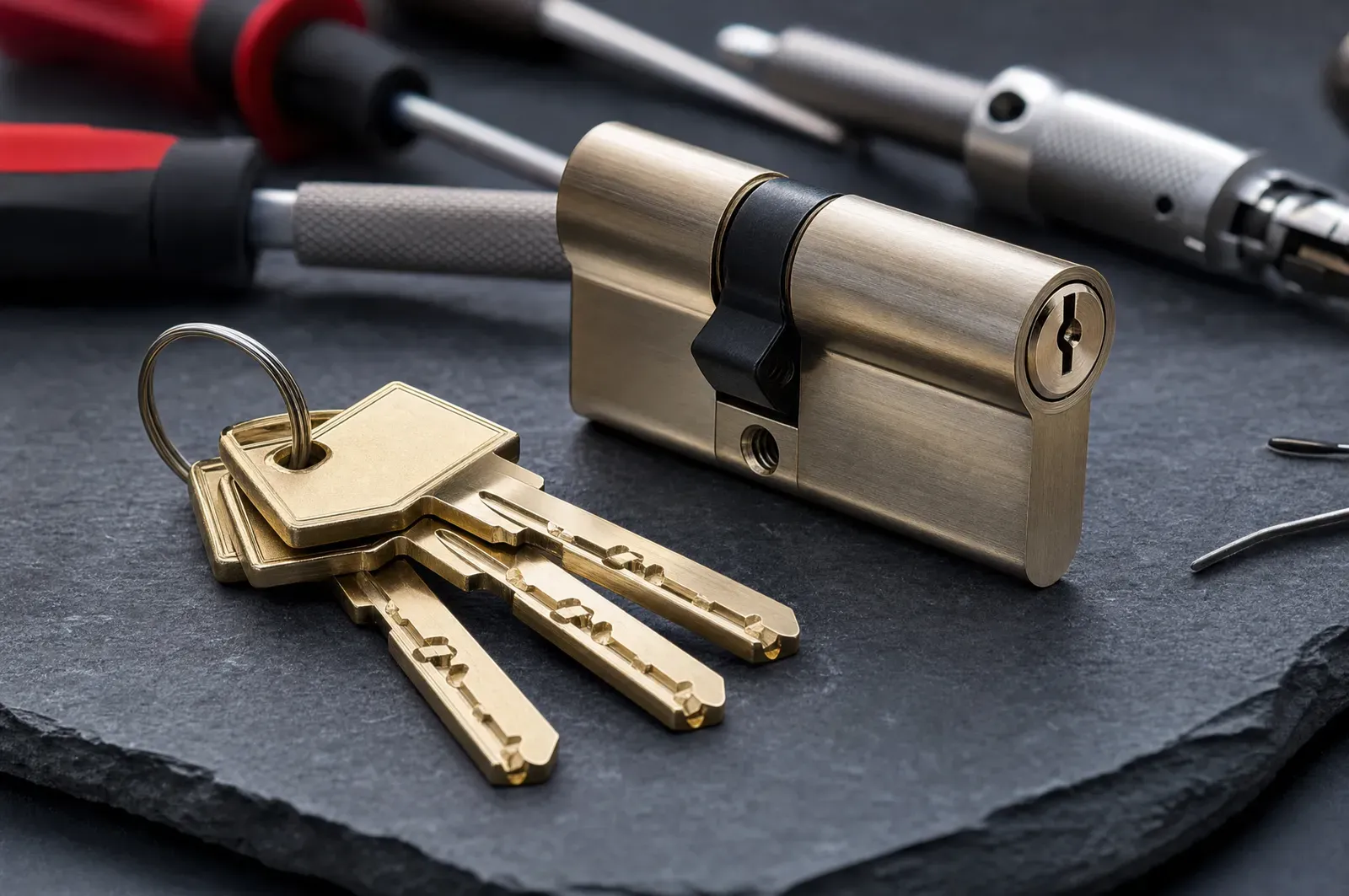
Used in uPVC, composite, and some timber doors with multi-point locking systems. Modern anti-snap euro cylinders include protection against snapping, bumping, picking, and drilling. Look for TS007 3-star rated cylinders or 1-star cylinders with 2-star escutcheons. Our uPVC locksmith team specialises in these.
Best for: uPVC and composite doors
Multi-Point Locking System
A gearbox mechanism that engages multiple locking points (typically 3-5) along the door edge when you lift the handle and turn the key. Provides significantly stronger resistance to forced entry than a single lock. Standard on modern uPVC and composite doors.
Best for: uPVC, composite, and high-security doors
Smart Locks
Keyless entry via smartphone app, PIN code, fingerprint, or key card. Smart locks offer convenience features like remote access, temporary codes for guests, and activity logs. Top brands include Yale Conexis, Samsung, and Nuki. We recommend models that retain a physical key backup.
Best for: Tech-savvy homeowners, rental properties, Airbnb hosts
Lock snapping, standards & insurance explained
Lock Snapping: The UK's Most Common Break-In Method
Lock snapping targets the euro cylinder on uPVC and composite doors, breaking it in seconds; a flush, anti-snap cylinder removes the grip burglars rely on.
Lock Snapping: The UK's Most Common Break-In Method
Lock snapping targets the euro cylinder on uPVC and composite doors, breaking it in seconds; a flush, anti-snap cylinder removes the grip burglars rely on.
If your front or back door is uPVC or composite, its security rests almost entirely on one component: the euro cylinder. Lock snapping is a forced-entry technique that targets it directly. Industry and police reporting describes how an unprotected, standard cylinder can be gripped with basic hand tools and snapped in two, often in seconds, exposing the internal mechanism so the door can simply be unlocked.
What makes it so attractive to opportunists is that it can leave very little visible damage, which in turn can complicate a future insurance claim where forced entry is hard to evidence. It is widely cited as accounting for a large share of euro-cylinder attacks across the UK, and it remains common precisely because so many doors still carry the basic cylinder fitted as standard.
A quick self-check: look at where your key goes in. If the cylinder protrudes more than about 3mm beyond the handle or escutcheon, it gives an attacker something to grip and is at higher risk. A flush-fitting, correctly sized anti-snap cylinder removes that purchase.
Worried after a break-in? Our break-in repair team can secure your door the same day. Read more on what lock snapping is and how to prevent it.
Anti-Snap vs Standard Euro Cylinders: What's the Difference
An anti-snap cylinder sacrifices its front section under attack while the central cam stays locked, and correct flush sizing matters as much as the rating.
Anti-Snap vs Standard Euro Cylinders: What's the Difference
An anti-snap cylinder sacrifices its front section under attack while the central cam stays locked, and correct flush sizing matters as much as the rating.
A standard euro cylinder is a single solid barrel: snap it and the whole lock fails. An anti-snap cylinder is engineered with a sacrificial front section along a cut line. Under a snapping attack, that front portion shears away and falls clear, but the central cam, the part that actually moves the bolts, stays protected and locked inside the door. The attack is wasted and the door stays shut.
The best high-security cylinders layer four protections together:
- Anti-snap - the sacrificial cut line described above.
- Anti-bump - resists the bump-key technique that bounces the pins open.
- Anti-pick - hardened, profiled pins that defeat manipulation.
- Anti-drill - hardened steel inserts that blunt a drill bit (premium models add anti-screw protection too).
Reputable high-security ranges include Avocet ABS, Yale Platinum 3-star, Mul-T-Lock and Banham. Several carry the manufacturer's own snap guarantee, sometimes with financial compensation if the lock is defeated by snapping, though terms vary by maker and we do not warrant those schemes ourselves. We can advise on the right option for your door and budget.
Just as important as the rating is correct sizing. A cylinder that is too long will protrude and reintroduce the very weakness you are trying to remove, so we measure each door to fit a cylinder that sits flush. Cylinders come in three common forms: half (single) for garages, sheds and outbuildings; full (double) with a key both sides; and thumb-turn, which lets you exit without a key, useful for fire escape but best avoided where glazing sits near the lock.
Need this fitted today? Our 24/7 emergency locksmiths carry anti-snap cylinders, or compare costs on the locksmith price list.
Window Lock Types
Sash Window Locks
Sash stops, dual screws, and Brighton fasteners for traditional sliding sash windows. Prevent the sashes from being opened from outside. Essential for period properties across London.
Casement Window Locks
Cockspur handles and espagnolette handles with key-locking function for side-hinged casement windows. Lockable handles prevent the window being opened without the key.
uPVC Window Locks
Multi-point espagnolette window locks with key-operated handles. Replace broken or worn handles to restore security. Available in white, chrome, gold, and black finishes.
Window Restrictors & Child Safety Latches
Cable or stay restrictors limit how far a window opens, improving child safety while maintaining ventilation. Choose models with a key override so the window can be opened fully for fire escape when needed.
Tilt-and-Turn Handles
Common on modern uPVC and aluminium windows, tilt-and-turn handles tilt inward for ventilation or swing fully open. Fit key-locking espag handles so the window cannot be operated from outside.
Sash Jammers
A low-cost add-on for uPVC and timber windows (and doors). The jammer blocks the sash from being levered or forced open and is a quick way to reinforce a weak point on a budget.
Patio & Sliding Door Locks
Sliding patio doors are a frequent target. Add patio door locks and anti-lift devices that stop the door being jacked out of its track, plus a key-locking handle for the main mechanism.
Garage & Shed Cylinders
Garages, sheds and side gates often use a half (single) euro cylinder. Upgrading these to an anti-snap half cylinder protects the outbuildings that store tools, bikes and ladders burglars look for.
Replacing a worn or broken window handle? Read our guide to window lock key replacement.
Lock snapping, standards & insurance explained
Security Standards to Look For
Look for BS3621, TS007, SBD, SS312, BS8621 and BS EN 1303 markings - the accreditations that prove a lock meets recognised UK and European security tests.
Security Standards to Look For
Look for BS3621, TS007, SBD, SS312, BS8621 and BS EN 1303 markings - the accreditations that prove a lock meets recognised UK and European security tests.
British Standard
The key standard for mortice deadlocks. Required by most insurance policies. Ensures the lock meets rigorous security testing criteria. Need a lock change to meet BS3621?
Kitemark Rating
Star rating for euro cylinders. 3-star cylinders (or 1-star with 2-star handle) provide anti-snap, anti-bump, anti-pick, and anti-drill protection.
Secured by Design
A police-backed initiative that certifies products meeting enhanced security standards. Look for SBD-approved locks for the highest level of protection.
Sold Secure Diamond
The dedicated cylinder snap test. A cylinder carrying Sold Secure Diamond SS312 has independently proven anti-snap performance, the highest cylinder grade.
Keyless Egress
For doors that must open from inside without a key (fire escape and many flats). A thumb-turn cylinder to BS8621 lets occupants leave quickly in an emergency.
European Cylinder Standard
The European performance standard for cylinders, often quoted alongside TS007 in newer insurance policies for uPVC and composite doors.
Lock Standards and Your Home Insurance
Insurers set a minimum lock standard for final-exit doors - usually BS3621 on timber and TS007 3-star on uPVC - and fitting below it can put a claim at risk.
Lock Standards and Your Home Insurance
Insurers set a minimum lock standard for final-exit doors - usually BS3621 on timber and TS007 3-star on uPVC - and fitting below it can put a claim at risk.
Your home insurance almost certainly sets a minimum standard for the locks on your final exit doors, and not meeting it can put a future claim at risk. The exact requirement depends on your door type:
- Wooden external doors: insurers typically require a BS3621 five-lever mortice deadlock. Many policies also expect a deadlocking night latch on the front door.
- uPVC and composite doors: policies increasingly require a multi-point locking system fitted with a cylinder meeting TS007 3-star (or a 1-star cylinder with a 2-star handle), and some quote BS EN 1303. A Sold Secure Diamond SS312 cylinder also satisfies the anti-snap requirement.
Fitting a non-compliant lock, or even a high-spec lock that is poorly fitted or wrongly sized, could affect a claim, so it pays to read your policy's exact wording on the locks and standards it names. This guidance is consistent with advice from the Association of British Insurers (ABI) and Metropolitan Police home-security guidance; we cite them for context rather than claiming to speak for them.
Not sure your locks meet your policy? Book a free security assessment and we will check every external door. More detail in our blog on why your insurance requires a BS3621 lock.
Changing or Upgrading Locks When You Move Home
On moving day you cannot know who still holds a key, so re-key (from £55 ex VAT) or change the locks (labour from £69 ex VAT) - and upgrade to insurance standard.
Changing or Upgrading Locks When You Move Home
On moving day you cannot know who still holds a key, so re-key (from £55 ex VAT) or change the locks (labour from £69 ex VAT) - and upgrade to insurance standard.
When you take on a new home, you have no way of knowing how many keys are still out there. Previous owners or tenants, letting agents, cleaners, builders and neighbours may all have held a key at some point. Securing the property is one of the first jobs worth doing, and you have two main options:
- Re-key the existing locks (from £55 ex VAT): we change the internal pins so all old keys stop working while you keep the same lock hardware. The most economical choice where the locks are already good quality and in good condition.
- Full lock change (labour from £69 ex VAT): we replace the lock outright. The right move when the existing locks are worn, basic, or below your insurer's standard.
Moving day is also the ideal moment to upgrade: swap a tired mortice for a BS3621 deadlock, or a standard cylinder for a TS007 3-star anti-snap one, so the property meets modern security and insurance standards from day one.
See our full lock change service and residential locksmith options, or read should you change the locks when moving into a new house.
Choosing the Right Locks for Your London Property
- 1
Identify the door or window material. Timber, uPVC, composite or aluminium each take a different lock, so start here.
- 2
Check your insurer's minimum standard. Look up the lock standards your policy names, typically BS3621 for timber and TS007 3-star for uPVC and composite.
- 3
Match the right lock and fit it correctly. The correct rating only protects you when the lock is properly sized and installed, especially that flush-fitting anti-snap cylinder.
- 4
Do not forget the rear and the windows. Back doors and ground-floor windows are common entry points, so secure them to the same level as the front.
London's housing stock shapes the right answer. Period and Victorian terraces often have timber sliding sash windows that benefit from sash stops and dual screws, while many newer flats and conversions have uPVC or composite front doors where an anti-snap cylinder is the priority. Running a shop, office or block? Our commercial locksmith team handles higher-spec door and window security for businesses.
Booking a fitting? See door lock installation, or for local help try our Islington locksmiths.
Why Londoners trust City Locksmith
Fully insured, DBS-checked engineers with 15+ years securing London homes and businesses - no call-out fee, with the price agreed up front.
Non-destructive entry
We open without damage where possible
DBS-checked engineers
Background-vetted technicians
Fully insured
Comprehensive public liability cover
15+ years
In the trade; City Locksmith founded 2018
24/7 emergencies
Any hour for lockouts; planned work 7am-10pm
No call-out fee
Free quotes, price agreed up front
Every job is carried out by an insured, DBS-checked engineer, with a fixed, all-inclusive price agreed before any work begins - no call-out fee and no surprises on the doorstep.
Security Lock FAQ
Find answers to common questions about our locksmith services.
What lock does my home insurance require?
What is the most secure type of door lock?
Are smart locks as secure as traditional locks?
How do I know if my euro cylinder is vulnerable to snapping?
What is lock snapping and how do burglars do it?
What is the difference between a TS007 3-star and Sold Secure Diamond (SS312) cylinder?
What lock should I fit on a uPVC door versus a wooden front door?
Should I change the locks when I move into a new home in London?
How do I secure traditional sash windows in a London period property?
Need help choosing the right locks? Call us
Our locksmiths provide free security advice and can upgrade your locks today, 7am to 10pm across London. Emergency call-outs run 24/7.
Call 020 4524 6667