

Best Front Door Locks UK 2026: By Door Type & Security Standard
By Iulian H., Lead Locksmith · Updated
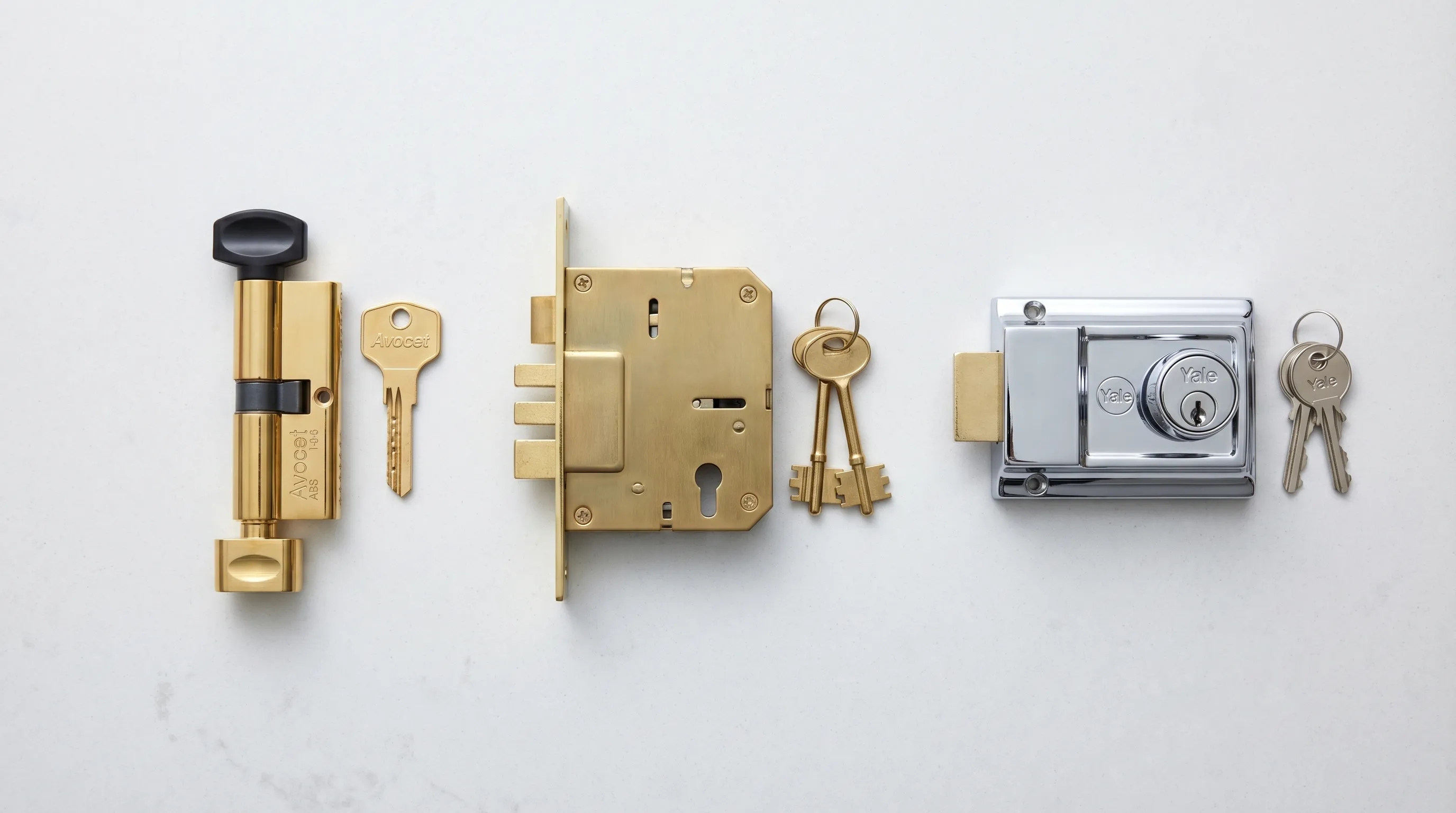
City Locksmith London: the right front door lock in 2026 depends on your door type. uPVC and composite doors need a TS007 3-star anti-snap euro cylinder (current edition DHF TS 007-1:2024) operating a multipoint locking system; timber doors need a 5-lever mortice deadlock certified to BS 3621:2017+A1:2024. A Sold Secure Diamond (SS312) cylinder is an accepted equivalent to TS007 3-star. Using the wrong lock type - or a lock with no recognised standard - can leave a break-in claim uninsured. Professional fitting starts from £69 labour ex VAT, and the cylinder must sit flush with the handle, protruding no more than 5mm, or the rating counts for little.
Your Front Door Lock Is the Most Important Security Decision You Make
According to the ONS Crime Survey for England and Wales (Nature of crime: burglary, year ending March 2025), 76.9% of domestic burglaries where the offender got in involved entry through a door, against 19.8% through a window. Entry was at the front of the property in 58.8% of cases and at the back in 37.4%, so both doors deserve the same specification. The lock on your front door is not a background detail - it is the primary barrier between your home and an intruder.
Despite this, most homeowners have no idea what lock is actually fitted to their front door, whether it meets any recognised standard, or what alternatives exist. This guide covers the locks worth considering in 2026, organised by door type, with the security standards and insurance rules explained clearly.
Step 1 - What Door Type Do You Have?
The right lock depends entirely on your door material. Fitting the wrong lock type is one of the most common and costly mistakes homeowners make.
uPVC Doors
uPVC doors, introduced widely in the UK from the 1980s, use a euro cylinder - the barrel-shaped lock that sits inside the door handle mechanism. The cylinder operates a multipoint locking system with hooks and bolts that engage at multiple points along the door edge when you lift the handle and turn the key. Nearly all uPVC doors built since the mid-1990s use this setup.
Composite Doors
Composite doors are constructed from multiple materials (typically a GRP outer skin, timber core, and foam insulation) and almost always use a euro cylinder and multipoint locking system, the same as uPVC. When the handle is lifted, typically three to five bolts engage along the door frame before the key throws the deadlock. High-quality composite doors may also carry PAS 24 certification, which means the door, frame, and locking system have been tested as a complete unit against an opportunist attack. The current edition is PAS 24:2022+A1:2024, and PAS 24 underpins Part Q of the Building Regulations for new dwellings in England and Wales.
Timber Doors
Traditional timber front doors typically use a mortice deadlock - a lock recessed (morticed) into the edge of the door, with a separate keyhole. Most timber front doors also have a night latch (Yale-type rim lock) for day-to-day convenience. The night latch should never be the only lock on an external timber door.
Lock Standards and Insurance: What the Ratings Mean
Understanding the standards before you buy saves you from buying a lock that looks secure but fails your insurer.
BS3621 - The Timber Door Standard
BS3621 is the British Standard for thief-resistant locks on timber doors. It applies mainly to 5-lever mortice deadlocks and BS-rated rim nightlatches. A BS3621 lock must resist drilling, picking, sawing, and forced entry to a defined test regime. The current edition, listed by Secured by Design as BS 3621:2017+A1:2024, is titled “Thief resistant lock assembly - key egress”, meaning it needs a key to unlock from the inside as well as the outside.
To carry BS3621 certification, a mortice lock must have at least 5 levers - a 3-lever mortice lock cannot meet this standard. Look for the BSI Kitemark stamped on the faceplate of the lock (the metal strip visible when the door is open).
Most UK home insurers require BS3621 on all external timber doors. Using a non-compliant lock and suffering a break-in can result in your insurer refusing to pay out.
TS007 - The Euro Cylinder Standard
TS007 is the standard specifically for euro cylinders and the door hardware (handle and escutcheon) around them. It was developed by the Door and Hardware Federation (DHF) to address lock snapping, is based on BS EN 1303, and uses a star rating. The current edition is DHF TS 007-1:2024; certificates issued under the previous TS 007-1:2014+A2:2018 version are still valid and widely seen in the market. There are two routes to a 3-star solution:
- 3-star cylinder alone - simpler to verify, and the option UK police forces recommend
- 1-star cylinder + a pair of 2-star handles = 3-star combined
The minimum you should accept for a uPVC or composite front door is TS007 3-star. This means the cylinder resists snapping, picking, bumping, and drilling to a standardised test. Pairing a 3-star cylinder with 2-star handles is described as a 5-star solution.
Check the fit, not just the rating. West Yorkshire Police advise that the cylinder should sit flush with the handle fascia and stick out no more than 5mm. A cylinder that protrudes gives an attacker something to grip and undermines the protection a 3-star rating is meant to provide.
Sold Secure Diamond (SS312)
Sold Secure Diamond (SS312) is an independent rating tested at the Sold Secure laboratory. Secured by Design describes SS312 as a “Specification for Cylinders for Locks”, based on BS EN 1303:2015 with additional requirements covering the security of the cylinder and its keys; the current edition is SS312:2024. It is the highest level in the Sold Secure scheme. Police forces including West Yorkshire and West Midlands recommend either TS007 3-star or Sold Secure Diamond, and a cylinder carrying both is the strongest independently verified option available.
Secured by Design
Secured by Design is a UK police initiative. Products carrying the Secured by Design mark have been tested and approved to police-specified security standards. It applies to cylinders, doors, and entire door sets and is often cited in planning conditions for new builds and social housing.
Lock-by-Door-Type Quick Reference
| Door Type | Recommended Lock | Minimum Standard | Insurance Requirement |
|---|---|---|---|
| uPVC | Anti-snap euro cylinder + multipoint system | TS007 3-star | TS007 or SS312 (check policy) |
| Composite | Anti-snap euro cylinder + multipoint system | TS007 3-star or PAS 24 door set | TS007 or SS312 (check policy) |
| Timber | 5-lever mortice deadlock + night latch | BS3621 | BS3621 mandatory for most insurers |
| Flat / apartment | BS8621 or BS10621 compliant lock with thumbturn | BS 8621:2017+A1:2024 | Varies by insurer - ask before fitting |
Best Euro Cylinders for uPVC and Composite Doors
Why Standard Cylinders Fail: Lock Snapping
Lock snapping is the most common burglary method used against uPVC doors in the UK. A burglar grips the exposed end of the cylinder with mole grips or a wrench and applies sideways force. A standard cylinder snaps at its weakest point - exposing the internal cam and allowing the door to open in seconds. A TS007 3-star anti-snap cylinder is designed with a sacrificial break section that snaps first, leaving the core of the lock intact and the door secured.
How to Measure Your Euro Cylinder
Before buying, measure the existing cylinder. Open the door and find the single retaining screw on the door edge. Measure from the centre of that screw hole to each end of the cylinder separately - for example, 35mm inside and 45mm outside gives you a 35/45 cylinder. Common UK sizes are 35/35, 40/40, and 45/45. A cylinder that protrudes beyond the handle escutcheon becomes a grip point for snap attacks; a cylinder that is too short will not operate the multipoint mechanism.
If you are unsure of your size, a locksmith can measure and supply the correct cylinder. City Locksmith London provides this as part of our lock change service across all London boroughs.
Top Euro Cylinder Brands
Avocet ABS (Advanced Breakthrough Security)
The Avocet ABS is widely regarded as one of the best euro cylinders available in the UK. It holds TS007 3-star certification and Sold Secure Diamond approval. Its key feature is a snap-secure sacrificial section that breaks away under attack while keeping the internal mechanism protected.
- TS007 3-star and Sold Secure Diamond certified
- Anti-snap, anti-pick, anti-bump, anti-drill protection
- Restricted key profile (cannot be copied without the security card)
- Widely available through professional locksmiths
- Cylinder cost: around £30-£50 (supply only)
Brisant Ultion
Ultion has become one of the most recognised lock brands in the UK, partly through effective marketing and partly through genuine quality. The Ultion cylinder uses a “Lockdown Mode” - if an attack is detected, an internal mechanism activates that makes the lock substantially harder to manipulate.
- Sold Secure Diamond certified; check the individual model for TS007 3-star Kitemarking, as the range has several variants
- Brisant markets an 11-pin internal mechanism (most cylinders use 5 or 6)
- Restricted key profile with security card
- Manufacturer security guarantee (terms vary by model - read them before relying on it)
- Cylinder cost: around £40-£70 (supply only)
Yale Platinum
Yale is the most widely recognised lock brand in the UK. The Yale Platinum is their top-tier euro cylinder, offering TS007 3-star certification and a good balance of security and value.
- TS007 3-star certified
- Anti-snap, anti-pick, anti-bump, anti-drill
- More widely available than Avocet or Ultion
- Standard key profile - copies can be cut at standard key cutters
- Cylinder cost: around £20-£35 (supply only)
Which Euro Cylinder Should You Choose?
For maximum security and key control: Ultion or Avocet ABS. Both offer restricted keys, Sold Secure Diamond rating, and the highest TS007 certification.
For good security at a lower price point, with easy key copying: Yale Platinum. It meets the standards that matter for insurance but does not restrict who can cut a copy.
For more on why lock snapping is the dominant UK burglary method and what anti-snap cylinders actually do, see our guide to high-security locks and when you need them.
Best Mortice Locks for Timber Doors
Why a 5-Lever Matters
A mortice lock is rated partly by the number of levers inside the mechanism. Each lever must be aligned precisely by the correct key before the bolt can move. A 3-lever mortice lock is significantly easier to pick than a 5-lever. BS3621 certification requires a minimum of 5 levers - so a 3-lever mortice lock cannot be BS3621 certified, regardless of what a product listing claims.
The Two-Lock Rule for Timber Doors
Security professionals and police-backed organisations recommend using two separate locks on every external timber door:
- A BS3621 5-lever mortice deadlock as the primary lock - key-operated from both sides, bolt thrown manually.
- A night latch (rim latch) for day-to-day convenience - the door latches automatically when pulled shut.
The night latch alone provides limited resistance. The mortice deadlock alone requires remembering to lock it every time. Together they provide layered security and meet insurer requirements.
Top Mortice Lock Brands
ERA Fortress
Solid build quality, widely stocked, and competitively priced. BS3621 certified. A reliable workhorse choice for timber front doors.
Yale PM562
Higher quality internals than the ERA Fortress, with a smooth operating action. BS3621 certified. A popular upgrade for older timber door mechanisms.
Union 2134E
A premium option with excellent build quality and a strong reputation among professional locksmiths. BS3621 certified. Often specified on period properties where longevity matters.
Chubb 3G114E (sold today as Union 3G114E)
The Chubb lock brand licence expired in 2010 and was not renewed, so this deadlock has been sold under the Union name ever since, still carrying the old Chubb model number. It remains a reliable, widely stocked BS3621 deadlock with the brand recognition some insurers ask for by name - just do not expect to find it branded “Chubb” in the shops today.
Night Latches (Secondary Lock)
A mortice deadlock should be the primary lock on a timber front door. A night latch provides convenient day-to-day locking - you pull the door shut and it latches automatically. It should never be relied upon as the only lock.
The Yale 89 is the most common night latch in the UK. For higher security, the ERA Nightlatch or Ingersoll SC71 offer better build quality and more pick resistance.
For flats and apartments: look for locks certified to BS 8621:2017+A1:2024, described by Secured by Design as a “thief resistant lock assembly - keyless egress”, meaning key operation from outside and thumbturn or similar from inside. Some buildings use BS 10621:2017+A1:2024 instead, a dual mode assembly that adds a deliberate deadlocking action from outside for when the property is empty. Secured by Design is explicit that dual mode must only be fitted where there is an alternative means of escape, never as the sole lock on a single-exit dwelling. In normal mode both standards give a thumbturn on the inside, so you can exit without a key in an emergency - a fire safety requirement in single-exit dwellings.
Multipoint Locking Systems - Do They Need Upgrading?
If you have a uPVC or composite door, the multipoint lock mechanism (the gearbox inside the door edge that throws the hooks and bolts) is a separate component from the euro cylinder. The cylinder is the lock you key; the multipoint gearbox is what actually secures the door.
Multipoint mechanisms wear out over time - typically after 10-15 years of daily use. Signs of wear include a stiff handle, bolts that do not engage fully, or a handle that drops or feels loose. A worn gearbox is a security weakness regardless of how good the cylinder is. If your door is over ten years old, have the mechanism inspected alongside any cylinder upgrade.
Our door lock installation service covers multipoint mechanism replacement as well as cylinder upgrades across all London areas.
How Much Does a Good Lock Cost Fitted?
| Lock Type | Part Cost (approx.) | Labour | Total (approx.) |
|---|---|---|---|
| Anti-snap euro cylinder (TS007 3-star) | £30-£70 | From £69 | From £99 |
| BS3621 5-lever mortice deadlock | £25-£60 | From £69 | From £94 |
| Night latch (rim lock) | £15-£40 | From £69 | From £84 |
| Multipoint gearbox replacement | £40-£120 | From £89/hr | Variable |
| Lock re-key (keep the lock, new keys) | £5-£15 | From £55 | From £60 |
Prices are ex VAT. The exact total depends on the brand chosen, any modifications needed to the door, and whether the door frame needs attention. See our locksmith price list for current London rates.
For a full breakdown of lock types and what suits each property, see our security door and window lock types guide.
Common Mistakes When Buying Door Locks
Choosing on Price Alone
A £10 euro cylinder from a hardware shop provides almost no security against a determined attack. The difference between a budget cylinder and a TS007 3-star is the difference between a lock that can be snapped in under 10 seconds and one that resists sustained attack.
Getting the Cylinder Size Wrong
Euro cylinders come in specific lengths. A cylinder that is too long protrudes from the door handle and gives a burglar something to grip. A cylinder that is too short will not engage the multipoint mechanism. Always measure before ordering.
Ignoring the Door and Frame
A high-security lock on a weak door or poorly fitted frame is undermined. Timber doors with rotten frames, uPVC doors with worn multipoint gearboxes, and composite doors with misaligned keeps all reduce security regardless of the cylinder. If the door or frame shows damage, address it at the same time as the lock.
Fitting a Mortice Lock to a uPVC Door
Mortice locks require a solid timber door leaf and cannot be fitted to uPVC or composite doors without major structural modification. uPVC and composite doors require euro cylinders. The two are not interchangeable.
Not Checking Your Insurance Policy
Some insurers specify BS3621 by name. Others accept TS007. Some require both locks on a two-lock timber door to meet standards. Read the lock requirements in your policy document before buying, and confirm with your insurer after fitting.
Getting a BS3621 or TS007 lock fitted in London
City Locksmith London supplies and fits all the lock types covered in this guide across Greater London. We are available 24/7, typically on site within 25 minutes, and charge no call-out fee. Our engineers are fully insured and DBS-checked. If you are unsure which lock your door needs, we assess it on site and recommend the right option for your door type, security requirements, and insurance terms.
Iulian H., lead locksmith at City Locksmith London, says: “We measure the door and quote the exact cylinder size and rating before any work starts, because the two things that decide whether a lock actually protects you are the certification on the barrel and whether it sits flush in the door.”
UK locksmithing is an unregulated trade, so no licence or registration is required to work as a locksmith here. Judge a locksmith on the standards they fit, whether they are insured, and whether they give you a price before starting.
Our lock change service covers euro cylinder upgrades, mortice deadlock replacement, night latch fitting, and multipoint mechanism replacement on all door types. Contact us for a free, no-obligation quote.