
What You Need to Know Before Buying New Locks
Buying the Wrong Lock Is an Easy Mistake to Make
Walk into a hardware shop or browse online, and you will be confronted with an enormous range of locks at wildly different price points. Without understanding what you are looking at, it is easy to buy a lock that looks solid but provides minimal real-world security, or to spend more than necessary on features you do not need.
This guide gives you the knowledge to make an informed purchase.
Understanding Lock Components
However complex a lock appears from the outside, most are built around the same fundamental components:
- Cylinder - the part the key enters; houses the pins, springs, and tumblers that allow (or prevent) the lock from turning
- Bolt - the metal element that physically extends into the door frame when the lock is engaged
- Keyway - the shaped channel that accepts your key’s unique profile
- Strike plate - the reinforced plate on the door frame that receives the bolt when locked
The security of a lock is determined by how resistant each of these components is to attack.
The Main Lock Types and Where to Use Them
Padlocks
Portable and versatile, padlocks suit gates, sheds, outbuildings, and storage units. For meaningful security, choose a closed-shackle design (where the shackle is largely enclosed by the body, leaving little exposed for bolt-cutters) from a reputable brand. Open-shackle padlocks from unknown manufacturers offer very little real protection.
Deadbolts
The workhorse of residential security. When locked, a solid steel bolt extends into the door frame, resisting the shimming and forcing attacks that defeat spring latch locks. Single cylinder deadbolts (key outside, thumb-turn inside) are the standard choice for most exterior doors. Choose a model certified to British Standard BS 3621.
Knob and Lever Locks
These integrate a latch bolt into the door handle. Convenient for interior doors, but the mechanism is vulnerable to forcible attack on exterior doors - the handle itself can often be sheared or leveraged to defeat the lock. Use on interior doors only.
Mortice Locks
Set entirely within the door body, mortice locks are among the most secure mechanical options. A five-lever mortice deadlock to BS 3621 is the standard required by most home insurers for wooden exterior doors. They require a door of adequate thickness (usually at least 45mm).
Euro Cylinder Locks
Used in most uPVC and composite door systems. The cylinder screws through the lock case and is secured by a central bolt. Standard cylinders are vulnerable to the “snap attack” where the external portion is removed, exposing the mechanism. Always choose an anti-snap cylinder rated to TS007 3-star for any exterior uPVC or composite door.
Electronic Locks
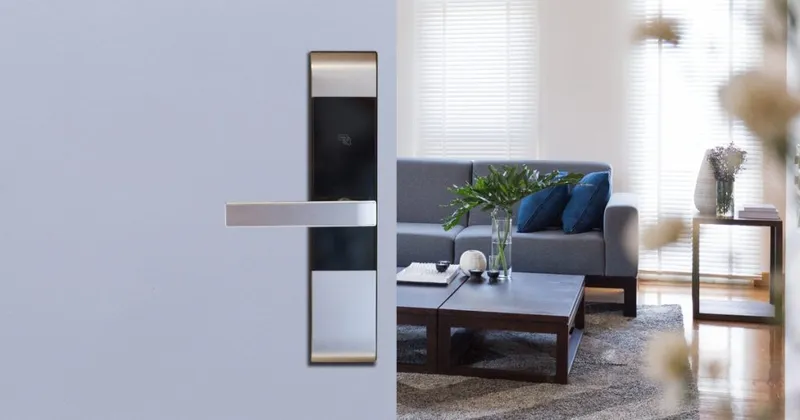
Keypads, RFID card readers, and biometric scanners replace or supplement physical keys with electronic authentication. Practical advantages include instant credential revocation, multiple user codes, and audit trails. The security of these systems is only as good as the physical lock body and the software - choose established brands with regular firmware updates.
Key Factors When Making Your Selection
1. Security Rating
In the UK, look for these certifications:
| Standard | What It Means |
|---|---|
| BS 3621 | British Standard for deadlocks and rim locks; required by most insurers |
| TS007 3-star | Highest rating for Euro cylinders; anti-snap, anti-pick, anti-drill, anti-bump |
| Sold Secure | Independent certification used widely across lock and security product categories |
| Secured by Design | Police-endorsed specification for residential and commercial products |
Never buy an exterior door lock without checking whether it carries one of these certifications.
2. Location: Exterior vs Interior
Exterior locks face significantly greater threats than interior locks. The standards above apply to exterior doors. For interior privacy locks, lower-security lever or knob locks are perfectly adequate.
3. Door Compatibility
Before buying, confirm:
- Door material - wooden, uPVC, composite, or metal
- Door thickness - mortice locks require a minimum door thickness; Euro cylinders must be the correct length to fit without protruding dangerously
- Existing hole positions - for like-for-like replacement, the new lock must fit the existing holes
A locksmith can measure and specify the correct size if you are unsure.
4. Budget
As a general guide:
- Standard Euro cylinders: £20-£40 (mid-range); £40-£80+ (high-security)
- Five-lever mortice deadlocks: £30-£80
- Smart locks: £80-£250+
Higher price does not always mean better security - check for certifications rather than trusting price as a proxy for quality. See our locksmith price list for fitted costs.
5. Trusted Brands
For mechanical locks, established brands with a long track record in the UK market include: Yale, Union, Chubb, Mul-T-Lock, and Abloy. For smart locks, Yale, August, and Schlage have strong reputations.
Why Professional Fitting Matters as Much as the Lock
The best lock poorly fitted is a security liability. A cylinder that protrudes too far from the door face creates a leverage point for snapping. A strike plate fixed with short screws into the door casing rather than the structural frame will fail under a single determined kick. A deadbolt with a misaligned bolt will not fully engage.
Professional installation by a qualified locksmith - especially for Euro cylinders and multi-point locking systems on uPVC doors - ensures the hardware works as designed. City Locksmith London provides supply and fitting of certified locks across London.
See our lock change services or contact us to discuss your specific requirements.