
What to Do When You're Dealing With Car Door Lock Issues
Car Door Lock Problems: Causes and Solutions
Your car’s door locks are critical to both your security and daily convenience. When they stop working properly, it can leave you locked out, locked in, or simply unable to secure your vehicle. Understanding what’s gone wrong is the first step to fixing it.
Diagnosing the Problem
Before reaching for any tools, take a moment to gather information:
- Visual inspection - Look for visible damage, rust, or debris around the lock barrel and door edge
- Listen carefully - Does the lock make unusual clicking, grinding, or grinding sounds?
- Test both methods - Try the lock with the physical key and with the remote; one may work even if the other doesn’t
The results of these checks will help you identify which of the following issues you’re dealing with.
Common Car Door Lock Problems
1. Jammed or Stiff Lock
Cause: Dirt, grit, and debris build up inside the lock barrel over time, preventing smooth operation.
Solution: Apply a quality lock lubricant (graphite or PTFE-based) into the barrel. Avoid using WD-40 as a long-term solution - it attracts dirt and can make the problem worse. Work the key in and out gently to distribute the lubricant. If the lock remains stiff, the internal components may be worn and need replacing.
2. Broken Key in the Lock
Cause: Keys weaken with repeated use and can snap - particularly if force is applied when the lock is stiff.
Solution: Do not attempt to pull the broken key out with pliers, as this risks pushing it further in. A professional auto locksmith will use a key extractor tool to remove the broken piece cleanly, then cut a replacement key.
3. Frozen Lock
Cause: Water gets into the lock barrel and freezes in cold temperatures, jamming the mechanism.
Solution: Apply a de-icing spray directly into the lock barrel. Alternatively, warm the key slightly with your hands before inserting it. Never pour boiling water over the lock - the thermal shock can crack the surrounding paintwork or damage seals. To prevent freezing, apply a small amount of lock lubricant at the start of winter.
4. Electronic Faults
Cause: Battery issues in the key fob, wiring faults, or a faulty central locking module can all prevent electronic unlocking.
Solution:
- Replace the key fob battery first - this resolves many electronic issues quickly
- Check the car’s fuse box for any blown fuses related to the central locking system
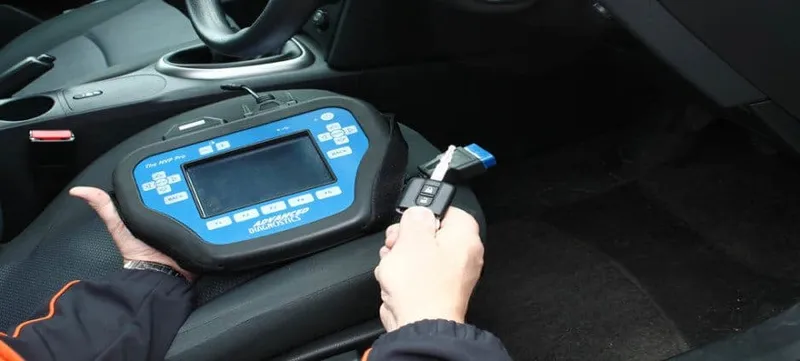
- If the physical key still works but the remote doesn’t, the fob may need reprogramming
- For wiring or module faults, a qualified auto locksmith or auto electrician will need to diagnose and repair the system
5. Worn or Damaged Lock Components
Cause: Locks wear out over time. Actuators, rods, and lock cylinders all degrade with use.
Solution: Worn components need to be replaced. This is a job for a professional, as incorrect fitting can leave your vehicle insecure. A locksmith can source and install the correct replacement parts for your make and model.
Tools You May Need
If you’re comfortable with DIY repairs, the following are useful to have:
- Lock lubricant (graphite powder or PTFE spray)
- De-icing spray
- Key extractor set
- Screwdrivers (flathead and Phillips)
- Replacement lock barrel or actuator (if replacing worn parts)
When to Call a Professional
For simple issues like a stiff lock or a flat fob battery, DIY solutions are often sufficient. However, professional help is advisable when:
- A key has broken inside the lock
- The central locking system has failed
- Internal components need replacing
- You cannot identify the cause of the fault
An emergency locksmith can attend promptly and resolve most lock faults on the spot, without needing to take the vehicle to a garage.
Get Expert Help Today
City Locksmith’s auto specialists are experienced with all makes and models of vehicle. Whether your lock is frozen, jammed, electronically faulty, or simply worn out, we carry the tools and parts to fix it on-site.