

How to Get a Snapped Key Out of a Lock
By Iulian H., Lead Locksmith · Updated
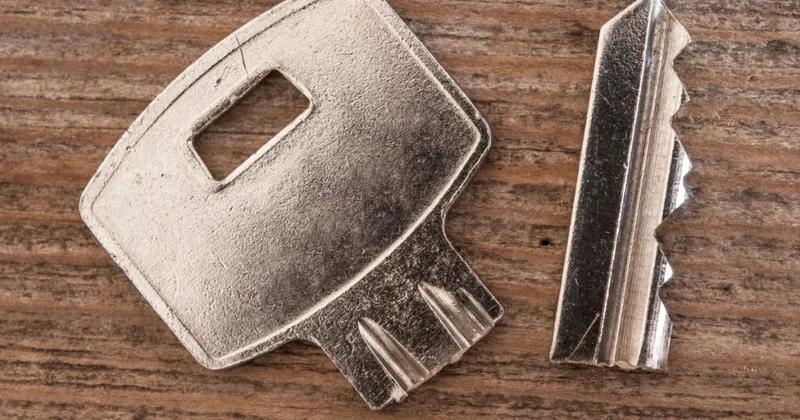
The safest first step when a key snaps in a lock is to lubricate the keyway with silicone spray or graphite powder, then use a broken key extractor tool to hook the fragment’s serrations and pull it straight out. Extractor sets cost around £5-£10 from any hardware shop, and if the fragment is protruding even slightly, narrow tweezers work just as well. Stop and call a professional if the fragment is flush or recessed, if your attempts are pushing it deeper, or if the cylinder itself feels damaged - forcing it turns a simple extraction into a full lock replacement. City Locksmith London extracts broken keys across Greater London 24/7, from £79 with no call-out fee.
Why Do Keys Snap in Locks?
Snapping a key inside a lock is a frustratingly common problem, particularly in the UK where temperature changes and damp conditions accelerate wear on both keys and lock mechanisms. Keys snap most often due to:
- Metal fatigue - Repeated use over years gradually weakens the key at stress points, especially near the shoulder where blade meets bow
- Worn or stiff locks - Forcing a key in a lock that needs lubricating puts excessive strain on the blade; if your key requires real effort to turn, the lock is telling you something
- Damaged keys - Bent or previously repaired keys are significantly weaker at the point of the original damage
- Cheap key copies - Poor-quality duplicate keys cut from soft brass or nickel alloys are noticeably more prone to snapping under load
Understanding the cause helps you prevent it happening again once the immediate problem is resolved.
Which UK Lock Types Are Most Affected?
Yale (Pin Tumbler) Locks
The most common lock on residential front doors. The key blade is relatively thin and can snap if the lock is stiff or the key is worn. These are generally easier to deal with because the broken piece is often close to the keyway entrance and accessible to standard tools.
Mortice Locks
Found on many internal doors and older timber front doors. The key is thicker and less prone to snapping, but if it does break, the fragment may be deeper inside the mechanism and harder to engage with a hook extractor.
Euro Cylinder Locks
Found in uPVC and composite doors. These are particularly challenging because the keyway is narrow and the broken key may be lodged firmly inside the cylinder. A broken key extractor sized for euro cylinders is essential; standard tools often cannot reach. If you have a uPVC or composite door with a euro cylinder, professional extraction is often the faster and safer option.
Before You Touch Anything: What to Check First
Before choosing a method, take 60 seconds to assess the situation - the wrong first move can turn a simple job into an expensive one.
- How much of the key is visible? If any fragment protrudes from the keyway, tweezers are viable. If it is flush or recessed, you need an extractor tool or professional help.
- Is the key straight or twisted? A twisted fragment has no clean surface to grip and is significantly harder to remove without specialist tools.
- Is the lock still functional? Turn the barrel carefully - if it feels damaged, crunchy, or completely seized, the cylinder itself may need replacing regardless of extraction.
- Has someone already tried to push the other half back in? This is a very common mistake that wedges the fragment deeper. Stop immediately if this has happened and call a locksmith.
Critical rule: never insert the other half of the snapped key or any rigid object in an attempt to push the fragment out - this almost always makes the situation worse.
What Tools Do You Need to Remove a Broken Key?
| Tool | Cost | Best for |
|---|---|---|
| Broken key extractor kit | £5-£10 (hardware shops, Amazon) | Deeply lodged or flush fragments |
| Narrow-tipped tweezers | Household item | Protruding fragments |
| Needle-nose pliers | Household item | Protruding fragments with a firmer grip |
| Jigsaw/hacksaw blade (short section) | Household item | Improvised extractor for deeper fragments |
| Silicone spray or graphite powder | £3-£8 | Lubricating before every attempt |
Safety glasses and thin work gloves are worth putting on - broken key edges are sharp.
How Do You Remove a Snapped Key, Step by Step?
Step 1: Lubricate Before Every Attempt
This step is non-negotiable. Spray silicone lubricant or apply graphite powder into the keyway and let it sit for 30-60 seconds before attempting extraction. Dry metal creates friction that can push the fragment further in with each attempt. For outdoor locks, silicone spray is better; for indoor locks, graphite powder is cleaner.
Method 1: Tweezers or Needle-Nose Pliers (Fragment Protruding)
When to use: Any part of the broken key is visible outside or at the keyway entrance.
Risk level: Low, provided you grip the edge rather than squeezing over the top of the fragment.
- Lubricate the keyway and wait 30 seconds
- Insert narrow-tipped tweezers or needle-nose pliers alongside - not over - the fragment
- Grip the flat edge of the broken key firmly
- Pull gently and steadily, straight outward - do not twist or jerk
- If the key moves slightly but will not come free, reapply lubricant and repeat
Common mistake: Squeezing tweezers shut directly over the fragment pushes it deeper rather than gripping it. Go alongside, grip the edge.
Method 2: Broken Key Extractor Tool (Flush or Slightly Recessed Fragment)
When to use: The fragment is flush with or just inside the keyway entrance. This is the most reliable DIY method and the one locksmiths recommend.
Risk level: Low - these tools are specifically designed not to damage lock pins.
- Lubricate the keyway thoroughly
- Insert the extractor hook alongside the fragment with the hooked end facing the key’s serrations (cut edge)
- Twist the tool gently to engage the hook with one of the key’s cuts
- Pull steadily and directly outward while maintaining hook engagement
- If the fragment moves but does not fully exit, keep tension on the tool, reapply lubricant, and repeat with small adjustments
Extractor kits typically include multiple hook profiles; try the thinnest one first so you do not wedge the fragment tighter.
Method 3: Jigsaw Blade Improvised Extractor (Deep Fragment, No Extractor Kit)
When to use: The fragment is lodged deeper and you do not have an extractor kit, but you have an old jigsaw or hacksaw blade.
Risk level: Medium - requires care to avoid scratching lock pins. Wear gloves.
- Use pliers to snap approximately 5 cm from the serrated end of the blade
- Wrap the non-serrated end with tape to form a handle
- Lubricate the keyway
- Slide the blade into the keyway with the teeth angled toward the key’s cuts and pointing back toward you
- Work the blade until the teeth engage a groove in the fragment, then pull steadily outward
- The serrations act like a miniature extractor hook - patience and steady tension work better than force
Important: Do not force the blade if it does not fit. It must slide in alongside the fragment without wedging.
Method 4: Tap and Gravity (Key Flush, No Tools Available)
When to use: As a last resort if no tools are available, to shift the fragment slightly before attempting tweezers.
Risk level: Low, but limited effectiveness on its own.
- Lubricate the keyway
- If the lock is portable (padlock) or can be repositioned, turn the keyway face downward
- Tap the body of the lock firmly with the heel of your palm or a rubber mallet - vibration can shift the fragment a millimetre or two
- Quickly attempt tweezers while the fragment is momentarily looser
Method 5: Why You Should Avoid Super Glue
Super glue is frequently suggested online but locksmiths consistently advise against it. The risks:
- Dripping adhesive - Even a small amount of glue entering the lock mechanism can bond the pins or cylinder, converting a £79 extraction job into a full lock replacement
- Permanent adhesion - If the glue cures before the fragment moves, the key becomes permanently bonded inside the lock
- Narrows your options - A locksmith arriving after a failed super glue attempt faces a much harder job, often requiring drilling
The only scenario where glue is even theoretically viable is when the fragment is clearly protruding and you have precise control - and in that case, tweezers are safer and more reliable.
When Should You Stop and Call a Locksmith?
Stop DIY attempts and call a locksmith if:
- The fragment is flush or recessed and you do not have an extractor kit
- Multiple attempts have failed and the key appears to be moving deeper
- The lock cylinder feels damaged - turning feels gritty, the barrel does not move, or pins are audibly damaged
- Someone has already tried to insert the other half of the key
- The lock is a euro cylinder in a uPVC door - these are narrow and easily damaged by improvised tools
- You are locked out - extraction alone will not open the door; a locksmith handles both simultaneously
- It is a car ignition - ignition cylinders connect to the steering lock and anti-theft system; a failed DIY attempt can trigger a security lockout or damage components costing significantly more to repair
City Locksmith London’s emergency locksmith team carries professional-grade extraction tools and can remove even deeply lodged fragments without damaging the lock in the vast majority of cases. If the cylinder is already worn or damaged, we will advise whether a lock change is needed - from £69 for labour - and can carry out the replacement on the same visit.
Iulian H., lead locksmith at City Locksmith London, says: “We extract the key non-destructively first and only replace the cylinder if it was already failing - and either way the price is agreed before we start.”
Our emergency door opening service starts from £79, with no call-out fee and all-inclusive pricing. We cover all of Greater London with a 25-minute response target, 24 hours a day, 365 days a year.
Is the Lock Still Safe to Use After Extraction?
Successfully removing the fragment does not always mean the lock is back to full health. After extraction:
- Test the lock with a spare key - if it turns smoothly, the lock is likely undamaged
- Check for pin damage - a lock that turns but feels stiff or catches may have damaged pins from the initial snap or from extraction attempts
- Replace worn or damaged cylinders - if the lock was stiff before the key snapped, it will be stiff again. The snap was a symptom, not the cause
- Get a new key cut immediately - do not rely on a single key; get at least one spare cut from a reputable locksmith or key-cutting service
If the cylinder is damaged and needs replacing, our lock change service covers all common lock types across London, including Yale, mortice, and euro cylinders.
How Do You Stop a Key Snapping Again?
- Inspect keys regularly - Look for bends, cracks, or thinning near the shoulder where the blade meets the bow. A key showing any of these signs should be replaced before it fails
- Lubricate locks annually - Apply graphite powder to the keyway (not oil, which attracts dirt) and operate the lock several times to distribute it
- Replace worn keys before they fail - Getting a spare cut costs a few pounds; an emergency locksmith call-out costs significantly more
- Never force a stiff lock - If the key requires real effort to turn, the lock needs attention. Forcing it puts direct bending stress on the blade at its weakest point. Our guide to the signs of a broken door lock covers what to watch for
- Use quality key copies - Cheap copies cut from poor-quality blanks are the most common cause of snapped keys in otherwise healthy locks. Always use a reputable key cutter
Broken Key Extraction in London
City Locksmith London specialises in broken key extraction for all lock types across Greater London. Our fully insured, DBS-checked engineers operate 24/7 and carry specialist tools for Yale, mortice, and euro cylinder locks. We can usually resolve the problem without any damage to your lock.
If the lock needs replacing afterwards, our team can carry out a lock change on the same visit. For a free, no-obligation quote or to book an emergency call-out, contact us - we aim to arrive within 25 minutes anywhere in London.
If you have locked your car keys inside your vehicle or broken a key in your ignition, our guide on how to unlock a car door without a key covers the options available to you.