

5 Signs of a Broken Door Lock and What to Do About Them
By Iulian H., Lead Locksmith · Updated
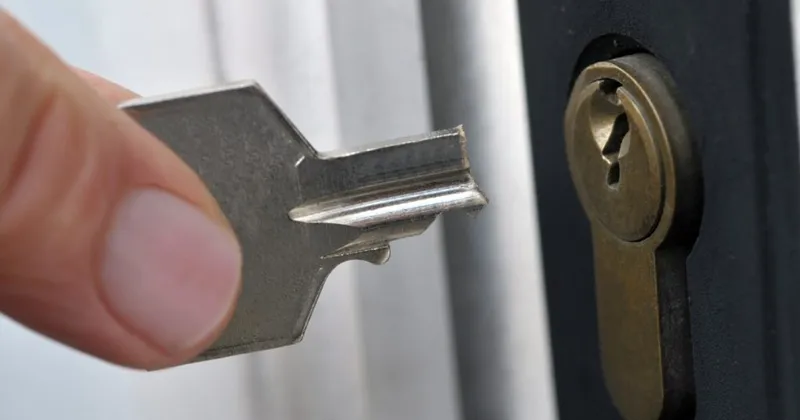
City Locksmith London: a failing door lock almost always gives warning before it fails completely. The five signs are a key that is stiff or hard to turn; a key that sticks or gets stuck; a loose or wobbly cylinder; a latch or deadbolt that will not engage reliably; and visible damage around the cylinder or frame. Acting early is cheaper: mechanism repair starts from £99 and a lock change from £69 in labour ex VAT, against an emergency door opening from £79 when the lock fails at midnight. Any of the five means the lock should be inspected now, not after it strands you on the wrong side of the door.
Why Spotting Lock Problems Early Matters
Most lock failures do not happen without warning. Internal pins wear gradually, frames shift with the seasons, and corrosion builds up over time. The cost of a routine lock change or mechanism repair is a fraction of the cost of an out-of-hours emergency locksmith callout - and it avoids the stress of being locked out of your own home.
The five signs below cover the most common failure patterns seen across London properties, from Victorian terraces with old rim locks to modern flats with euro cylinder multipoint systems.
Sign 1: Is Your Key Stiff or Hard to Turn?
What it means: Stiffness when turning the key is one of the earliest indicators of a developing lock problem. It is caused by worn internal pins, a misaligned cylinder, a worn or poorly-cut key, or a build-up of debris inside the keyway. In older properties, corrosion from damp or humidity is a common contributing factor.
Every key insertion and turn causes small amounts of friction on the internal pins. Over hundreds or thousands of cycles, this degrades the precise tolerances the mechanism depends on. What starts as slight resistance becomes progressive difficulty - and eventually the key will not turn at all.
What to do:
- Apply a graphite-based or dry silicone lubricant directly into the keyway. Insert the key and turn it back and forth several times to distribute the lubricant.
- If this resolves the stiffness, repeat every six months as routine maintenance.
- If lubrication does not help, or if stiffness returns within a few weeks, the cylinder pins are worn. Have a locksmith inspect the cylinder - it may need replacing.
- Try a spare key if you have one. A worn key that has been copied multiple times can cause stiffness even when the cylinder itself is fine.
Do not use oil-based lubricants such as WD-40 on lock cylinders - they attract dust and grit, which accelerates internal wear.
Sign 2: Does Your Key Get Stuck or Refuse to Come Out?
What it means: A key that becomes difficult to remove, or that sticks mid-turn, suggests worn key profile, misaligned lock components, or grit inside the cylinder. A key that sticks repeatedly is at risk of snapping off inside the lock - which turns a minor problem into an emergency requiring professional extraction.
Keys that have been copied multiple times are particularly prone to this. Each copy introduces small inaccuracies that accumulate, so the copy of a copy may not align cleanly with the lock’s internal pins.
What to do:
- Do not force the key. Forcing a sticking key is the fastest way to snap it, which leaves the broken section inside the cylinder.
- Try gentle lubrication and a very slight side-to-side wiggle while applying steady outward pressure.
- If the key continues to stick, contact a locksmith to assess whether the cylinder needs replacing. Ask for a spare key to be cut from the original specification at the same time.
- For guidance on what to do if a key has already snapped, see our article on how to get a snapped key out of a lock.
Sign 3: Is Your Lock Cylinder or Handle Loose and Wobbly?
What it means: A cylinder or handle that wobbles, rattles, or pulls away from the door face is more than an annoyance - it is a security vulnerability. On euro cylinders (the type used on most uPVC and composite doors), looseness is almost always down to the single fixing screw that secures the cylinder to the door: it has worked loose, is worn, or was the wrong length for the door thickness. That is a different problem from a cylinder that has actually been snapped, which leaves it visibly broken in two rather than simply wobbly.
A loose handle on a uPVC door is particularly serious. The handle mechanism is what drives the multipoint locking system. If it fails, the door can become impossible to open from either side, or it may appear to lock while the bolts have not fully engaged.
What to do:
- Check the visible screws on the lock faceplate, cylinder clamp, and handle backplate. Tightening them may resolve the immediate wobble.
- If looseness returns, or if the internal mechanism feels damaged, the lock should be professionally assessed.
- Persistent looseness in a euro cylinder usually means the cylinder itself needs replacing - ideally with a TS007 3-star anti-snap cylinder (current edition DHF TS 007-1:2024) or a Sold Secure Diamond SS312 equivalent, both of which UK police forces recommend.
- While you are looking, check how far the cylinder sticks out. West Yorkshire Police advise that a euro cylinder should sit flush with the handle fascia and protrude no more than 5mm; anything more gives an attacker something to grip, whatever the rating says.
- For a full door lock installation or upgrade to a higher-security cylinder, our team can advise on the right specification for your door type.
Iulian H., lead locksmith at City Locksmith London, says: “A wobbly cylinder is usually a ten minute fix if you catch it early, and a full door repair if you leave it until the gearbox strips - we quote the price before we start either way.”
Sign 4: Does the Deadbolt or Latch Fail to Engage Cleanly?
What it means: A latch or deadbolt that sticks, does not extend fully, or fails to enter the strike plate reliably indicates either a door alignment problem or worn/damaged internal mechanism components. Inconsistent locking - where the lock works on some attempts but not others - is a red flag that should not be ignored.
This symptom is common in two scenarios. First, seasonal movement: timber doors expand and contract with humidity, but uPVC and composite doors are affected just as much, because the steel reinforcement inside the profile expands and contracts with temperature. Some doors only fail to lock on hot afternoons or after a cold snap, which is a useful clue that the door itself, not the lock, is the cause. Second, worn gearbox: on multipoint locks, the internal gearbox that drives the multiple locking points wears out over years of use, causing intermittent failure even when the door alignment is fine. A handle that feels heavy, needs lifting more than once, or spins with little resistance usually points here.
What to do:
- Check whether the door closes fully and squarely in the frame. Look for gaps at the hinge side or top of the door that suggest the door has dropped.
- If the door has dropped at the hinge side, adjust the hinges first - most uPVC and composite doors have adjustable hinges, usually turned with an Allen key in small increments. Fine-tune the strike plate only once the door sits properly, since the lock can only ever be as good as the door’s position.
- If the door and frame appear aligned but the bolt still fails to engage consistently, the lock mechanism itself needs inspection.
- A door that appears closed but has not actually locked is a serious security risk. Do not leave it unattended - contact a locksmith to assess the mechanism.
Sign 5: Is There Visible Damage Around the Cylinder or Frame?
What it means: Scratch marks around the keyhole, fresh gouges on the cylinder face, a buckled or cracked door frame, or a cylinder that has been pushed inward are all signs of either attempted forced entry or serious physical damage. Even if the lock appears to function after damage, its structural integrity cannot be relied upon.
Corrosion is a more gradual form of visible damage. Orange or brown discolouration on or around the cylinder, particularly on external doors exposed to rain and damp, indicates that internal components are deteriorating. Rust weakens the metal and increases friction, and a corroded lock can seize without warning.
What to do:
- Contact a locksmith immediately if you see signs of tampering or forced entry. A damaged lock should be replaced rather than repaired - the internal mechanism cannot be reliably verified after physical force has been applied. If the door or frame is damaged too, our break-in repair service covers same-day door, frame and lock repair.
- If there are signs of a break-in attempt, a full security assessment of the property is advisable. For guidance on common forced-entry methods, see our article on how burglars break into houses in London.
- Corroded external locks should be replaced proactively, before they seize completely. Applying external lubricant regularly can slow corrosion but will not reverse it once internal components are affected.
Repair or Replace? How to Decide
Not every failing lock needs to be replaced. The decision depends on the nature of the problem, the age of the lock, and its security rating.
Repair is usually appropriate when:
- The problem is stiffness, minor sticking, or a misaligned strike plate
- The cylinder is in good condition but the door frame has shifted slightly
- A worn key is contributing to the symptoms
Replacement is the right choice when:
- The cylinder is physically damaged, cracked, or shows signs of forced entry
- The internal mechanism fails inconsistently, even after lubrication
- The lock is not rated to current UK standards (BS 3621:2017+A1:2024 for timber door mortice locks, DHF TS 007-1:2024 3-star or Sold Secure SS312 Diamond for euro cylinders)
- You have moved into a new property and do not know who holds keys
- Repairs have been carried out repeatedly without resolving the underlying problem
For euro cylinders on uPVC and composite doors, upgrading to a TS007 3-star anti-snap cylinder when replacing is strongly recommended. Greater Manchester, West Yorkshire and West Midlands Police have all issued public warnings about lock snap burglaries and recommend exactly this specification.
City Locksmith London charges from £99 to repair or fix a lock mechanism and from £69 in labour to change a lock cylinder. See our full locksmith price list for a transparent breakdown with no hidden fees. Free quotes available - no call-out fee.
The Risk of Waiting: Why Lockouts Are Avoidable
Each of the five signs above is significantly cheaper and less stressful to address before the lock fails completely. A lock that seizes at 11pm on a cold night, or that jams with you on the wrong side of the door, becomes a genuine emergency - and emergency callouts attract higher costs and longer waits.
For a deeper look at what can go wrong when locks fail and how to reduce the risk, see our article on what to know before you change your door lock.
City Locksmith London responds within 25 minutes across all London postcodes, 24 hours a day, 365 days a year, with no call-out fee. If you are seeing any of the signs above, contact us for a free quote before the problem becomes an emergency. If you are already locked out, our locked out of house page explains what happens on arrival.
UK locksmithing is unregulated, so there is no licence to check. Judge a locksmith on whether they are insured, whether they give you a price before starting, and whether they try non-destructive entry first.